
Waterloo station spills 100 million passengers a year onto its concourse, and most of them immediately head somewhere else. The South Bank, Westminster, across the bridge to the other side. But the streets around Waterloo itself – the narrow Victorian terraces, the underground tunnels, the hidden museums and the secret green spaces – are some of the most interesting, underrated corners of central London and things to do near Waterloo Station.
This bank holiday, whether it’s 4th May or 25th May, don’t rush through Waterloo, stay, explore. You’ll find plenty of Things to Do Near Waterloo Station this bank holiday from Victorian time capsule street that’s been used as a set for Doctor Who, a museum dedicated entirely to gardens, a 40-year-old book market under a bridge, and one of the best immersive theatre venues in the country, buried beneath the railway arches.
And when you’re ready to sit down, eat something brilliant and play a game with your mates, we’re right here. Draughts Waterloo is tucked inside the Leake Street Arches, surrounded by 300 metres of street art and about a three-minute walk from the station. But more on that later, first, here’s where to go…
Roupell Street: A Victorian Time Capsule
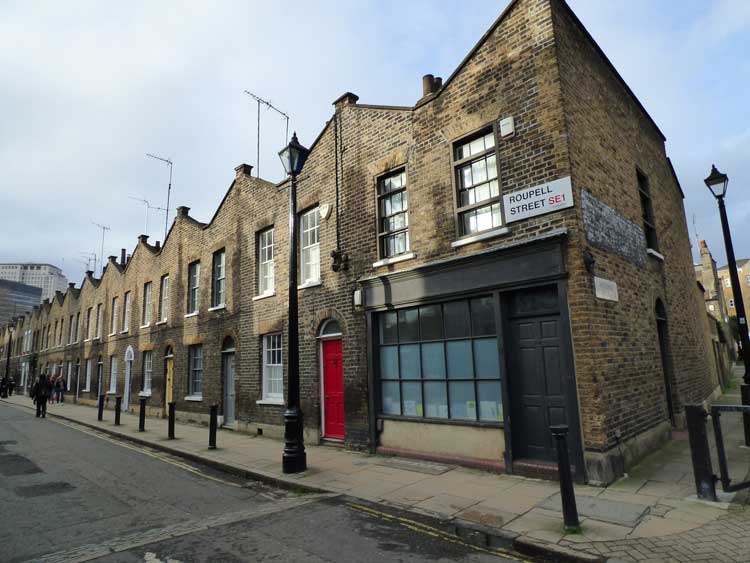
If you walk south from Waterloo station for about five minutes – past The Cut, down towards Roupell Street – something strange happens. The modern city just… disappears, you’re suddenly standing on a narrow street of two-storey Georgian terraces built in 1824 by a gold refiner called John Palmer Roupell, and nothing has really changed since.
These little houses were built for working-class Londoners – artisans, tradesmen, industrial workers. Real London brick, proper chimneys, sturdy wooden window frames. Open the front door, and you’re directly on the street, no front garden, no buffer. The whole Roupell Street Conservation Area – including the surrounding Theed Street and Whittlesey Street – is one of the most intact pockets of early 19th-century London still standing. The fact that these streets survived the Blitz, the developers, and the constant churn of a city that tears itself down and rebuilds every few decades is remarkable.
It’s no surprise that film crews love it here. Doctor Who, Legend (the Kray twins film), and Call the Midwife have all filmed scenes on Roupell Street. On a bank holiday morning, when the light’s right and the traffic is quiet, it genuinely feels like stepping back 200 years. There’s a proper old-school pub on the corner too, if you need to sit down and take it all in.
The whole thing is a five-minute detour from the station, and most people walk straight past without knowing it’s there.
The Garden Museum: London’s Most Overlooked Small Museum
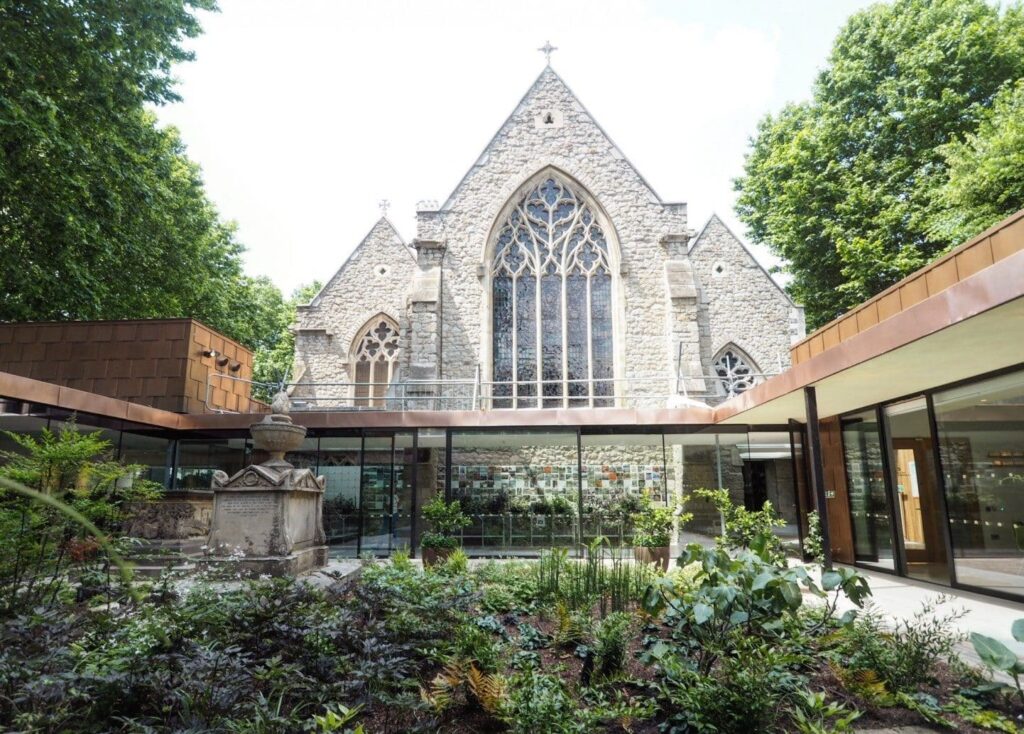
Next door to Lambeth Palace, directly across the river from Parliament, the Garden Museum is one of those places that makes you wonder how it stays so quiet. It’s London’s only museum dedicated to the history and design of gardens, housed inside the medieval church of St Mary-at-Lambeth – a building that predates the Norman Conquest.
The museum was saved from demolition in the 1970s when the Tradescant Trust stepped in. The Tradescants – John and his son, also John – were 17th-century royal gardeners and plant collectors whose tomb is in the churchyard. They introduced over 200 plants to Britain, and the museum tells their story alongside the broader history of how the British became so obsessed with their gardens.
Until 10th May 2026, there’s an exhibition called Seeds of Exchange: Canton and London in the 1700s, which traces the botanical exchange between Canton and London from 1766 to 1773. Later in the year, from October to December 2026, there’s a show of works by German artist Sabine Moritz.
The museum has a lovely cafe and a garden that’s worth the visit on its own. Entry is about 10 minutes’ walk from Waterloo Station. On a bank holiday when you want something calm, thoughtful and completely different from the usual London attractions, this is it.
The South Bank Book Market
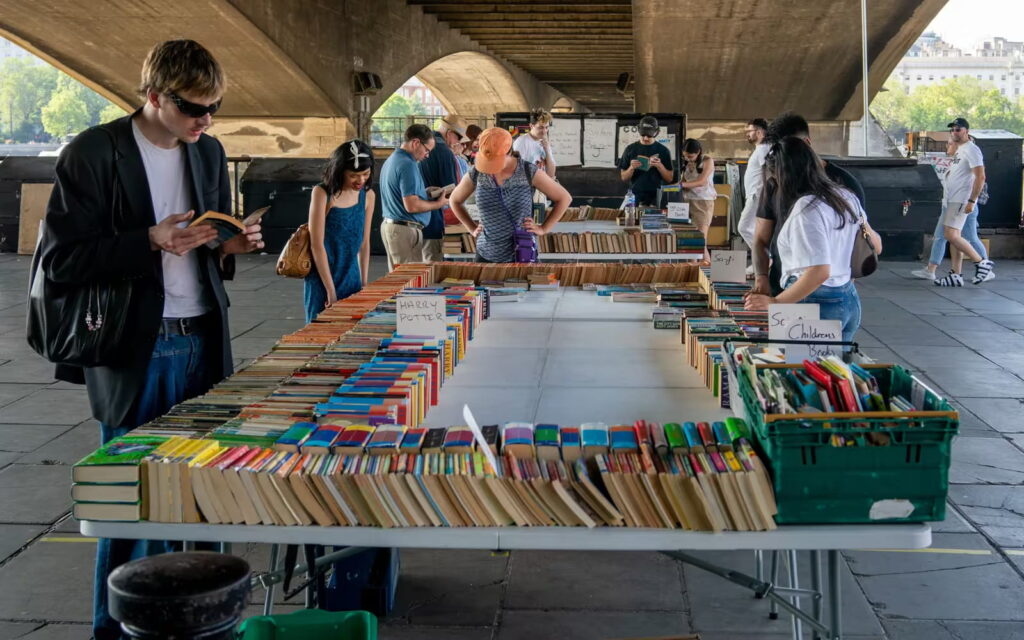
Tucked under Waterloo Bridge on Queen’s Walk, opposite the BFI Southbank, there’s been a book market operating for over 40 years. It first opened on 2 July 1983, and it’s still there, eight stalls strong, rain or shine.
The South Bank Book Market tables carry hundreds of paperbacks, hardbacks, antiquarian editions, vintage maps, historic prints and postcards. Contemporary fiction sits next to first editions, and children’s books share space with out-of-print curiosities. It’s the kind of place where you go looking for one thing and come away with three books you didn’t know existed.
The market is open daily until 7pm, though not all stalls open every day – weather, transport disruption and the occasional red carpet event at the BFI can thin the numbers. Bank holidays tend to be busy, though, and browsing under the shelter of the bridge while the river flows past is one of the most pleasantly bookish things you can do in London.
Grab something from the stalls, walk it down to Draughts, and read it over a coffee before your game arrives at the table. That’s a proper bank holiday morning.
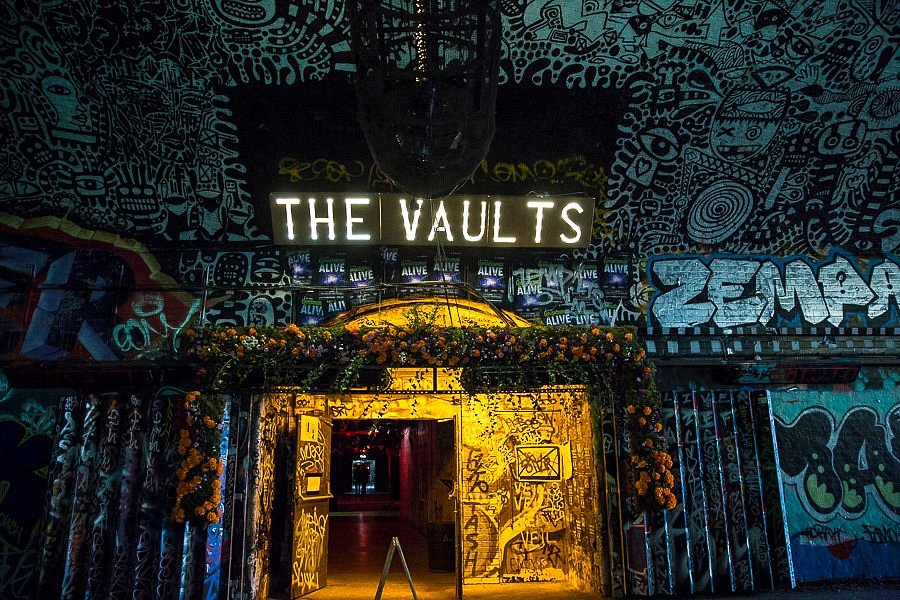
The Vaults: Underground Theatre Beneath the Station
Right underneath Waterloo station, in a network of Victorian railway tunnels, sits The Vaults – London’s home for immersive theatre and alternative arts. If you’ve walked through the Leake Street graffiti tunnel to get to Draughts, you’ve walked right past the entrance.
The Vaults is not your typical theatre. The cavernous brick arches and subterranean atmosphere make every show feel like you’ve stumbled into somewhere you shouldn’t be. Over the years, they’ve hosted some of the most talked-about immersive experiences in London, and their annual Vault Festival (January to March) is a massive showcase of experimental theatre, cabaret, comedy and installation art.
Running until 31 May 2026 is Dark Secrets – The Esoteric Exhibition, which brings together over 1,000 authentic objects across 27 themed rooms exploring the history of the occult, magic and secret societies. It’s atmospheric, slightly unsettling and completely absorbing, exactly the kind of thing that’s better experienced than explained.
Check the vaults.london for the current programme. There’s nearly always something on, and it pairs brilliantly with an evening at Draughts afterwards – same street, same underground energy, very different vibes.
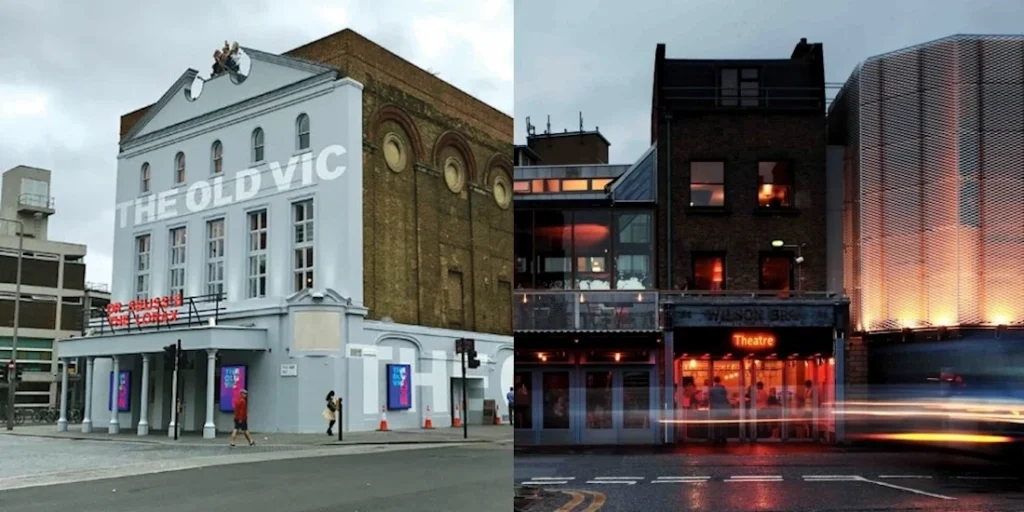
The Old Vic and Young Vic: Two Theatres, One Street
The Cut – the street that runs south from Waterloo Road – is home to two of London’s most important theatres, and between them they’ve been shaping British drama for the better part of two centuries.
The Old Vic has been going since 1818. Think about that for a second – over 200 years of performances in the same building. Laurence Olivier, Judi Dench, Maggie Smith, Kevin Spacey (who was artistic director from 2003 to 2015) and Matthew Warchus (the current artistic director, in his final season) have all worked there. Right now, until 23 May 2026, they’re running One Flew Over the Cuckoo’s Nest with Aaron Pierre and Giles Terera in the lead roles. After that, Tom Stoppard’s Arcadia arrives as part of Warchus’s farewell season.
A few doors down, the Young Vic has been the home of bold, progressive, risk-taking theatre since 1970. From 11 May 2026, they’re presenting the UK premiere of Care by Alexander Zeldin – a deeply human exploration of the social care system that’s already been acclaimed internationally. The Young Vic is the kind of theatre where you see something on a Tuesday evening for £20 and then can’t stop talking about it for a month.
Both theatres are a ten-minute walk from Draughts. The combination of a show and a game is one of the best evening plans in London – see the early performance, walk down to Leake Street, and settle in for food, drinks and board games. We’re open late enough to make it work.
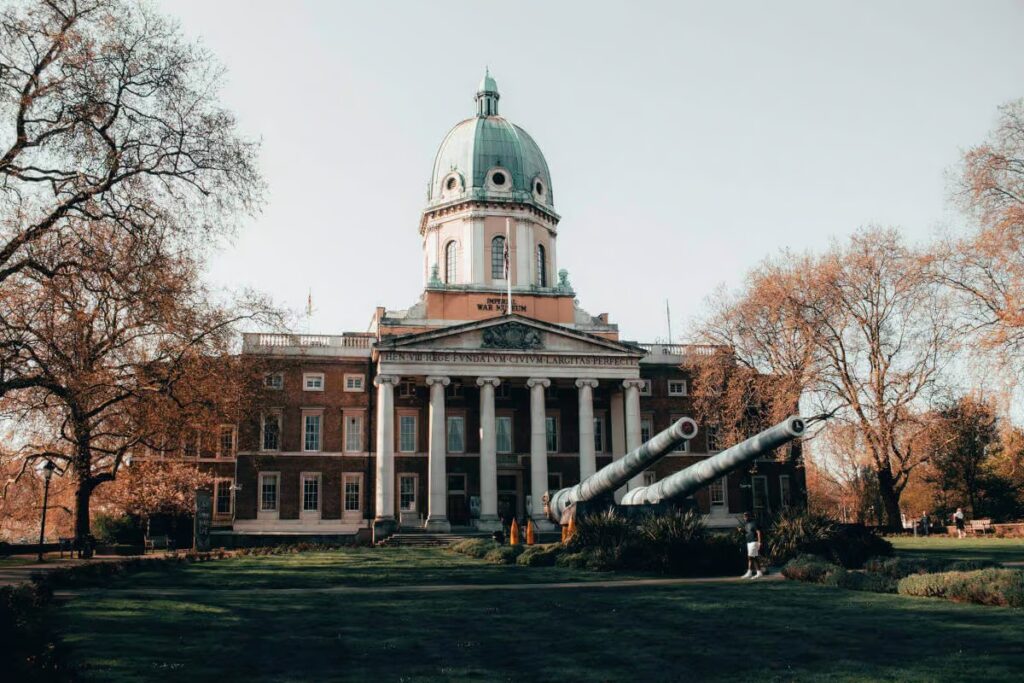
Imperial War Museum: Free and Extraordinary
About 15 minutes’ walk from Waterloo station (or a short hop on the Bakerloo Line to Lambeth North), the Imperial War Museum is one of London’s most powerful museums – and it’s completely free.
The permanent galleries at the Imperial War Museum cover everything from the First and Second World Wars to the Falklands, Korea and conflicts in the former Yugoslavia. The Holocaust Exhibition and the Galleries of Modern Conflict are genuinely moving experiences. Beauty and Destruction: Wartime London in Art is a free exhibition telling the story of London during the Second World War through the eyes of artists who lived through it.
The museum sits in a gorgeous park that used to be the Bethlem Royal Hospital grounds (yes, the original Bedlam), and on a bank holiday, the park itself is a lovely place to sit. The whole experience – the grounds, the free galleries, the depth of what’s on display – makes this one of the best value days out in London. It’s best to book a free timed entry ticket online in advance during busy periods like bank holidays.
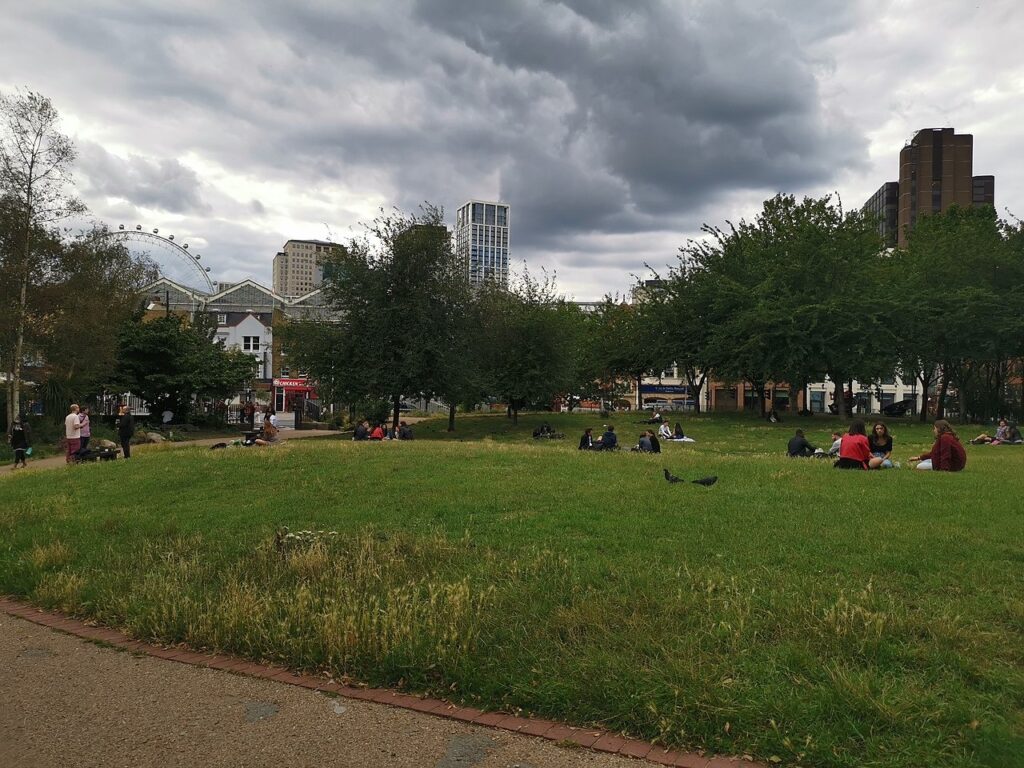
Waterloo Millennium Green: A Pocket of Calm
Right opposite the Old Vic on Baylis Road, there’s a tiny park that most people walk past without registering. Waterloo Millennium Green was carved out of a former car park in 2000 – the first new park in Lambeth for 20 years at the time – and it’s now a miniature wildlife haven in the middle of one of the busiest parts of London.
There’s a waterfall flowing over a rock pool, wildflower meadows, a pond surrounded by planted borders, and a couple of wonderful metal insect sculptures that kids love. It’s managed by the Bankside Open Spaces Trust and designated a Site of Importance for Nature Conservation. All of this in a space you could walk across in two minutes.
On a bank holiday, when the streets around Waterloo are heaving, ducking into the Millennium Green feels like finding a secret room. Bring a coffee from Lower Marsh, sit by the waterfall, and enjoy five minutes of genuine calm before heading to your next thing.
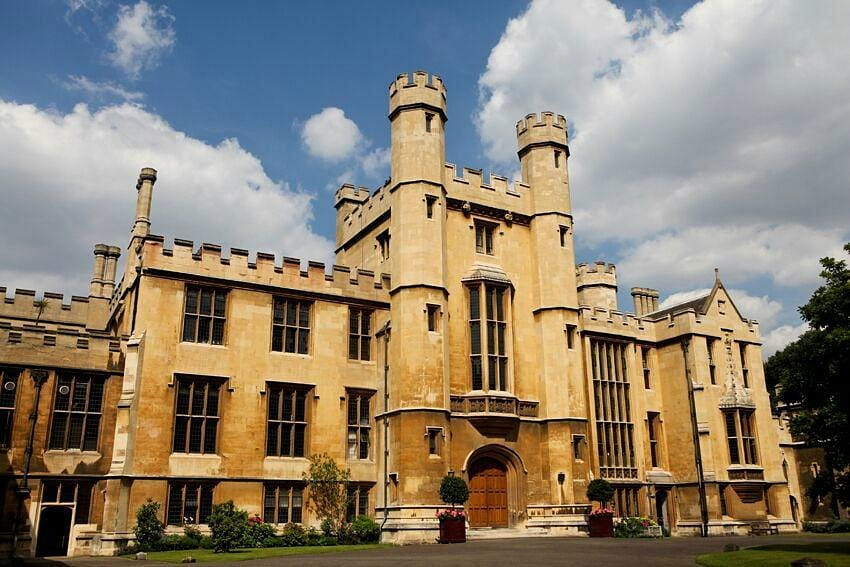
Lambeth Palace: A Hidden Garden Reopening
Right next to the Garden Museum, Lambeth Palace has been the London residence of the Archbishop of Canterbury since the 13th century. Most Londoners have never been inside, because it’s not routinely open to the public, but 2026 is bringing some changes.
After a fallow year in 2025, the Palace gardens are reopening for summer open days in 2026, usually once a month from May to September. And the first HOPE Day (Heritage Open Palace Experience) of 2026 falls on Friday, 29th May – the day after the spring bank holiday. It’s being held in collaboration with Help Musicians, with tickets available to book online in advance.
The gardens are extraordinary – 800 years of continuous cultivation in the shadow of the Palace walls, with mature trees, formal borders and the kind of historical atmosphere you don’t find anywhere else in London. When the open days are announced (follow @visitlambethpalace on social media), grab tickets quickly; they go fast.
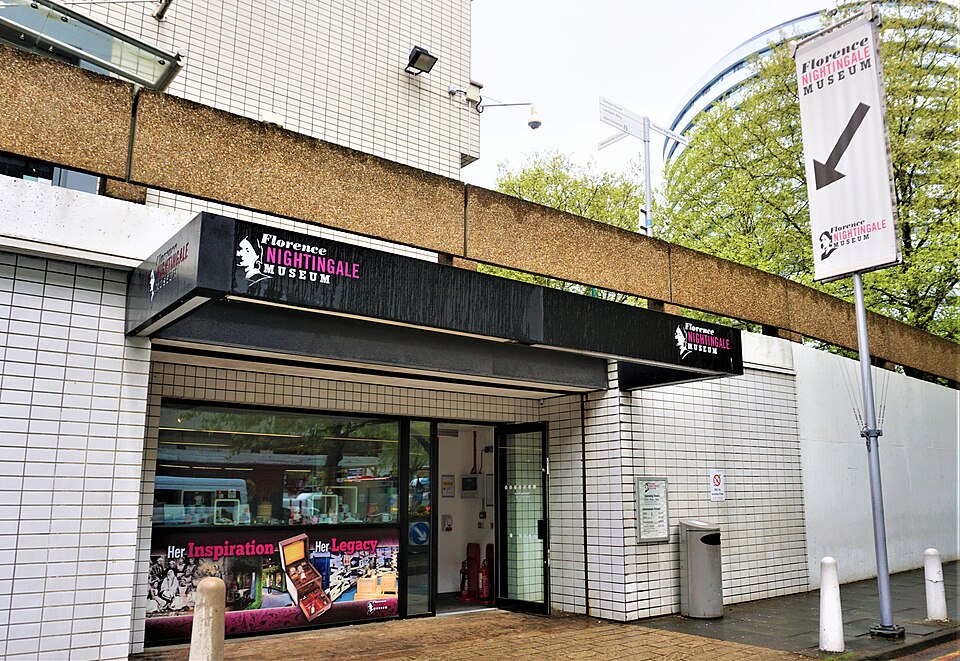
Florence Nightingale Museum: A Quiet Gem
Inside St Thomas’ Hospital, right at the Waterloo end of Westminster Bridge, there’s a small museum dedicated to one of the most important figures in medical history. The Florence Nightingale Museum tells the story of the woman who founded modern nursing, reformed military healthcare and was, fascinatingly, a pioneer of statistical graphics.
The collection includes personal items, Crimean War artefacts and nursing memorabilia. According to ThingsToDo.co.uk, adult tickets to the Florence Nightingale Museum start at £9.99, with discounted rates available for children and families. It’s open Tuesday to Sunday, 10am to 5pm.
What makes this one special is the intimacy. It’s small, personal and quietly powerful. You’re standing in front of Florence Nightingale’s actual possessions, in a hospital that carries on the work she started. On a bank holiday, when the big museums are rammed, this one is blissfully uncrowded.
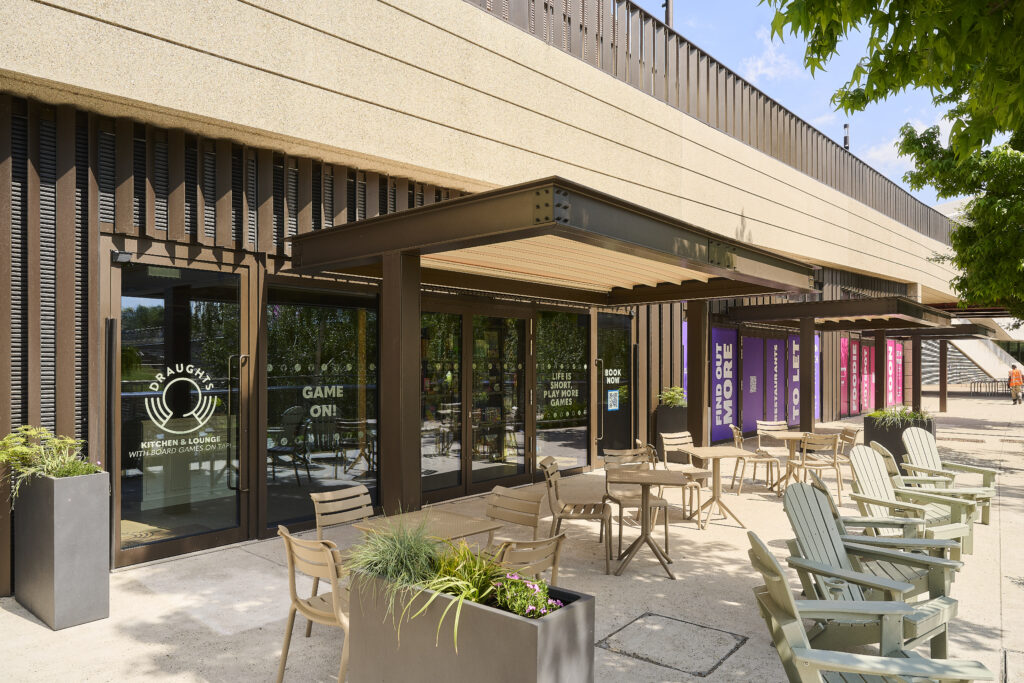
Bring It All Together at Draughts Waterloo
Everything on this list is within walking distance of Draughts Waterloo. We’re at Arch 16, Leake Street, SE1 7NN – right inside the famous graffiti tunnel beneath Waterloo station. If you’ve spent the morning exploring Roupell Street, browsing the book market or wandering the Garden Museum, we’re where you come to land.
Draughts is a bar, board game, kitchen and lounge with over 1,000 games, a full food menu and a proper bar. We’re the place where groups of friends come to eat, drink and spend an afternoon doing something that doesn’t involve a screen. Tell our staff what you’re in the mood for – something competitive, something collaborative, something silly, something strategic – and they’ll pick the perfect game for your group in about thirty seconds.

On a bank holiday, Draughts Waterloo is at its best. The graffiti tunnel outside is buzzing, the tables are full, and the energy is brilliant. We’re open late enough to be your evening plan too – grab dinner, order cocktails, and play something you’ve never heard of before.
Book your table at draughtslondon.com – bank holidays are some of our busiest days, so don’t leave it to chance. Call us on 020 7450 5339 if you need anything.
Practical Tips and Things to Do Near Waterloo Station
- Waterloo station is served by National Rail, the Bakerloo, Northern, Jubilee and Waterloo & City lines, and the bus network. It’s one of the best-connected stations in London.
- Roupell Street is a 5-minute walk south from the station via The Cut. Look for the terraces just before you reach the corner pub.
- The Garden Museum is 10 minutes’ walk along Lambeth Palace Road. Note: through April 2026, access is via the cafe gate on Lambeth Road due to maintenance works.
- The South Bank Book Market is under Waterloo Bridge on Queen’s Walk, opposite BFI Southbank. Open daily until 7pm (weather permitting).
- The Vaults entrance is in Leake Street, the same tunnel as Draughts. You’ll see the signs.
- The Old Vic and Young Vic are both on The Cut, about an 8-10-minute walk from the station.
- IWM London is at Lambeth Road, about 15 minutes’ walk or one Tube stop from Lambeth North. Book free timed entry online.
- Draughts Waterloo is at Arch 16, Leake Street, SE1 7NN. Book at draughtslondon.com or call 020 7450 5339.
Frequently Asked Questions about Things to Do Near Waterloo Station
What are the best things to do near Waterloo Station this bank holiday?
The area around Waterloo is packed with hidden gems. Explore the Victorian time-capsule streets of Roupell Street, browse the 40-year-old South Bank Book Market under Waterloo Bridge, visit the Garden Museum next to Lambeth Palace, catch a show at the Old Vic or Young Vic, or experience immersive theatre at The Vaults beneath the station. Finish at Draughts Waterloo in Leake Street for board games, food and drinks. The 2026 May bank holidays are Monday 4 May and Monday 25 May.
What is Roupell Street near Waterloo?
Roupell Street is a beautifully preserved row of Georgian terraces built in 1824, about five minutes’ walk from Waterloo Station. The entire Roupell Street Conservation Area has survived largely unchanged for 200 years and has been used as a filming location for Doctor Who, Call the Midwife and the Kray twins film Legend. It’s one of the most atmospheric hidden corners of central London.
Is the Imperial War Museum free?
Yes – IWM London is completely free to visit, though donations are welcome. The permanent galleries cover conflicts from the First World War to the present day, including the Holocaust Exhibition. Special temporary exhibitions may require a paid ticket. The museum is about 15 minutes’ walk from Waterloo Station or one Tube stop to Lambeth North. Book a free timed entry ticket online during busy periods like bank holidays.
What is The Vaults Waterloo?
The Vaults is an immersive theatre and alternative arts venue in the Victorian railway tunnels beneath Waterloo station. The entrance is in Leake Street, the same graffiti tunnel as Draughts Waterloo. Running until 31 May 2026 is Dark Secrets – The Esoteric Exhibition, featuring over 1,000 objects across 27 themed rooms. Check thevaults.london for the current programme.
What’s on at the Old Vic in 2026?
The Old Vic is running One Flew Over the Cuckoo’s Nest with Aaron Pierre and Giles Terera until 23 May 2026, followed by Tom Stoppard’s Arcadia as part of artistic director Matthew Warchus’s final season. The theatre has been operating since 1818 and is about 10 minutes’ walk from both Waterloo station and Draughts Waterloo.
What’s on at the Young Vic in May 2026?
From 11 May 2026, the Young Vic presents the UK premiere of Care by Alexander Zeldin – an acclaimed exploration of the social care system. The Young Vic is on The Cut, a few doors from the Old Vic, and about 10 minutes’ walk from Draughts Waterloo.
Where is the South Bank Book Market?
The South Bank Book Market is under Waterloo Bridge on Queen’s Walk, opposite BFI Southbank. It’s been operating since 1983 and has eight stalls selling contemporary fiction, antiquarian books, vintage maps, prints and postcards. Open daily until 7pm, weather permitting. About a 10-minute walk from Waterloo Station.
What is Waterloo Millennium Green?
Waterloo Millennium Green is a pocket park opposite the Old Vic on Baylis Road, created from a former car park in 2000. It has a waterfall, rock pool, wildflower meadows, a pond and metal insect sculptures. It’s a designated Site of Importance for Nature Conservation and a peaceful escape in the middle of busy Waterloo. Free to visit.
Where to eat near Waterloo Station on a bank holiday?
Draughts Waterloo at Arch 16, Leake Street, SE1 7NN is a bar, board game kitchen and lounge with a full food menu and over 1,000 games – perfect for a bank holiday. Lower Marsh market (two minutes from the station) has street food stalls open Monday to Saturday.
Is Lambeth Palace open to the public?
Lambeth Palace gardens are reopening for summer open days in 2026, usually once a month from May to September. The first HOPE Day (Heritage Open Palace Experience) of 2026 is on Friday, 29 May 2026, in collaboration with Help Musicians, with tickets available online. The Palace is next to the Garden Museum, about 10 minutes’ walk from Waterloo Station. Follow @visitlambethpalace for the latest opening dates.
What is the Florence Nightingale Museum?
The Florence Nightingale Museum is inside St Thomas’ Hospital at the Waterloo end of Westminster Bridge. It celebrates the life of the founder of modern nursing through personal items, Crimean War artefacts and nursing memorabilia. Open Tuesday to Sunday, 10am to 5pm. Tickets are 12 pounds for adults. A typical visit takes 45 to 75 minutes.
What are free things to do near Waterloo this bank holiday?
Free options include walking the Roupell Street Conservation Area, browsing the South Bank Book Market under Waterloo Bridge, visiting the Imperial War Museum (free, book timed entry online), relaxing in Waterloo Millennium Green, exploring the Lower Marsh street food market (free to browse), and walking through the Leake Street graffiti tunnel to see the ever-changing street art. Draughts Waterloo is right in the tunnel for when you’re ready for food, drinks and games.
How do I get to Draughts Waterloo?
Draughts Waterloo is at Arch 16, Leake Street, London SE1 7NN. From Waterloo station, head to the Victory Arch exit and walk down the steps towards Leake Street (the graffiti tunnel). We’re inside the arches, about a three-minute walk from the main concourse. You can also reach us from the South Bank side via the tunnel.
Book at draughtslondon.com or call 020 7450 5339.