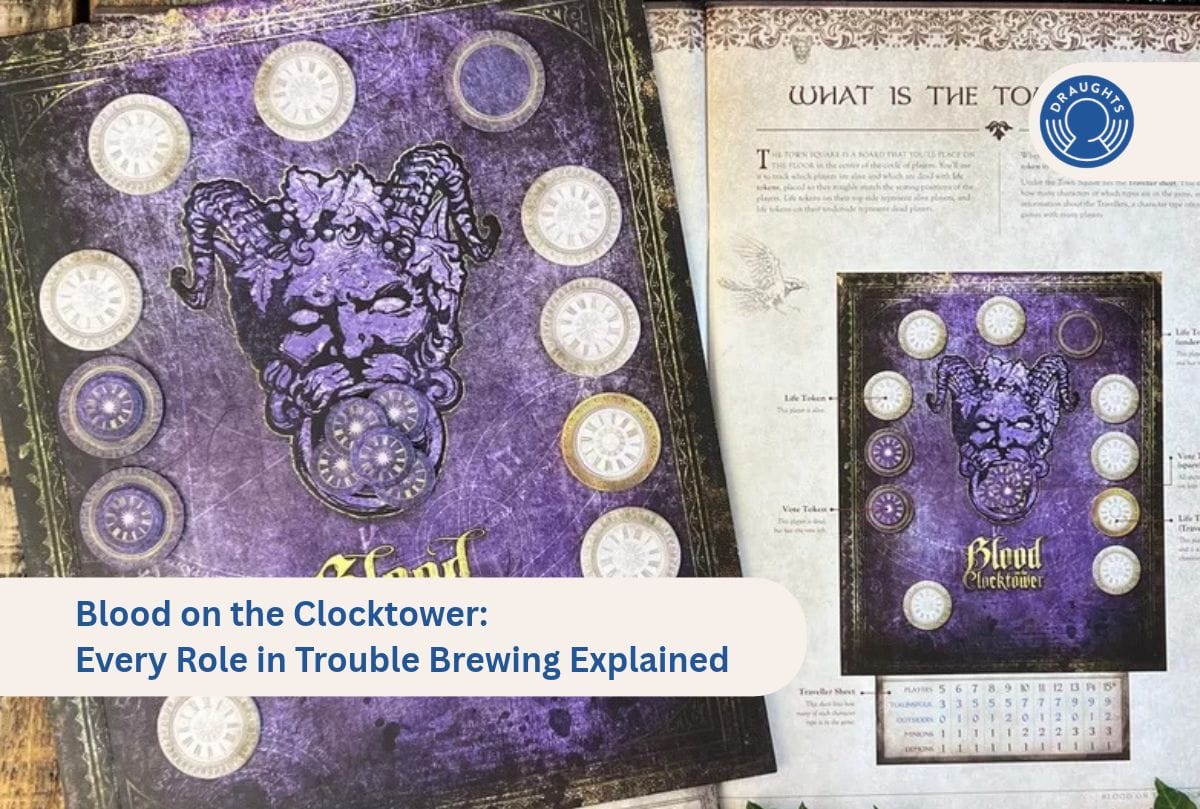
There are social deduction games. And then there is Blood on the Clocktower.
Most games in this genre ask you to sit quietly after you’re eliminated and watch everyone else have fun. Blood on the Clocktower never eliminates you. Dead players keep their voice. They keep a vote. They can still win – or lose – the game. It is the single smartest fix to the biggest problem in the genre, and it is why this game has become the one that serious board game players talk about above everything else.
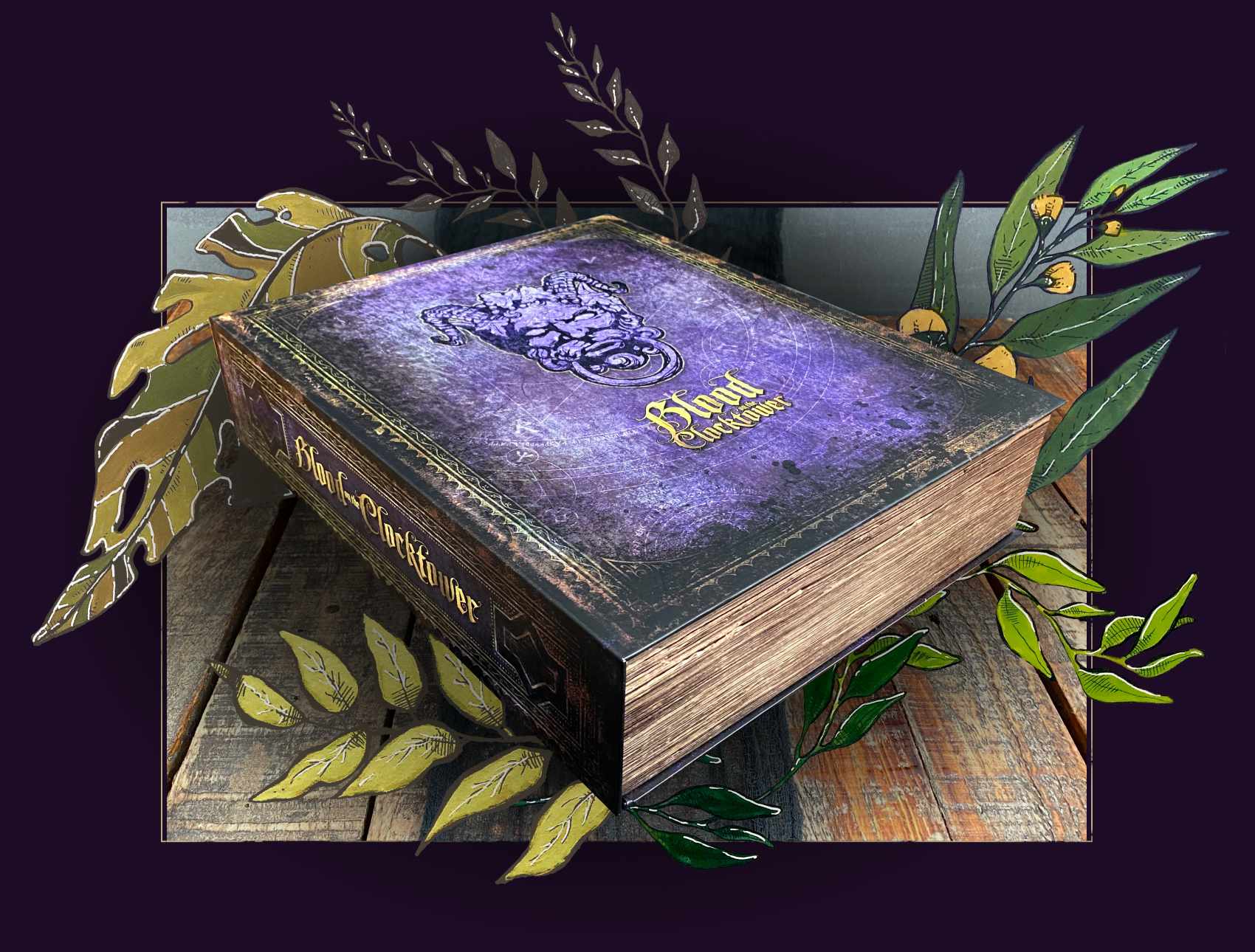
Created by Steven Medway and published by The Pandemonium Institute, Blood on the Clocktower is a social deduction game for 5 to 20 players, set in the fog-drenched village of Ravenswood Bluff. A demon is hiding among the townspeople. The town needs to find it and execute it before too few players remain alive. The demon and its minions need to stay hidden long enough to win.
Here is everything you need to know before you play.
What is Blood on the Clocktower?
Blood on the Clocktower is a hidden role game – which means everyone receives a secret character at the start, and nobody knows what anyone else is.
Players are split into two teams: the good team (Townsfolk and Outsiders) and the evil team (the Demon and its Minions). The good team outnumbers the evil team significantly – but the evil players know exactly who each other are from the very beginning, and they are lying to everyone else.
One player acts as the Storyteller – they do not take a character role but instead run the game, manage each player’s abilities, and keep track of what is happening behind the scenes. The Storyteller role is a big deal. In Blood on the Clocktower, they can provide misinformation, nudge the balance, and shape the narrative of the session. A good Storyteller makes the game memorable.
The roles: Townsfolk, Outsiders, Minions and the Demon
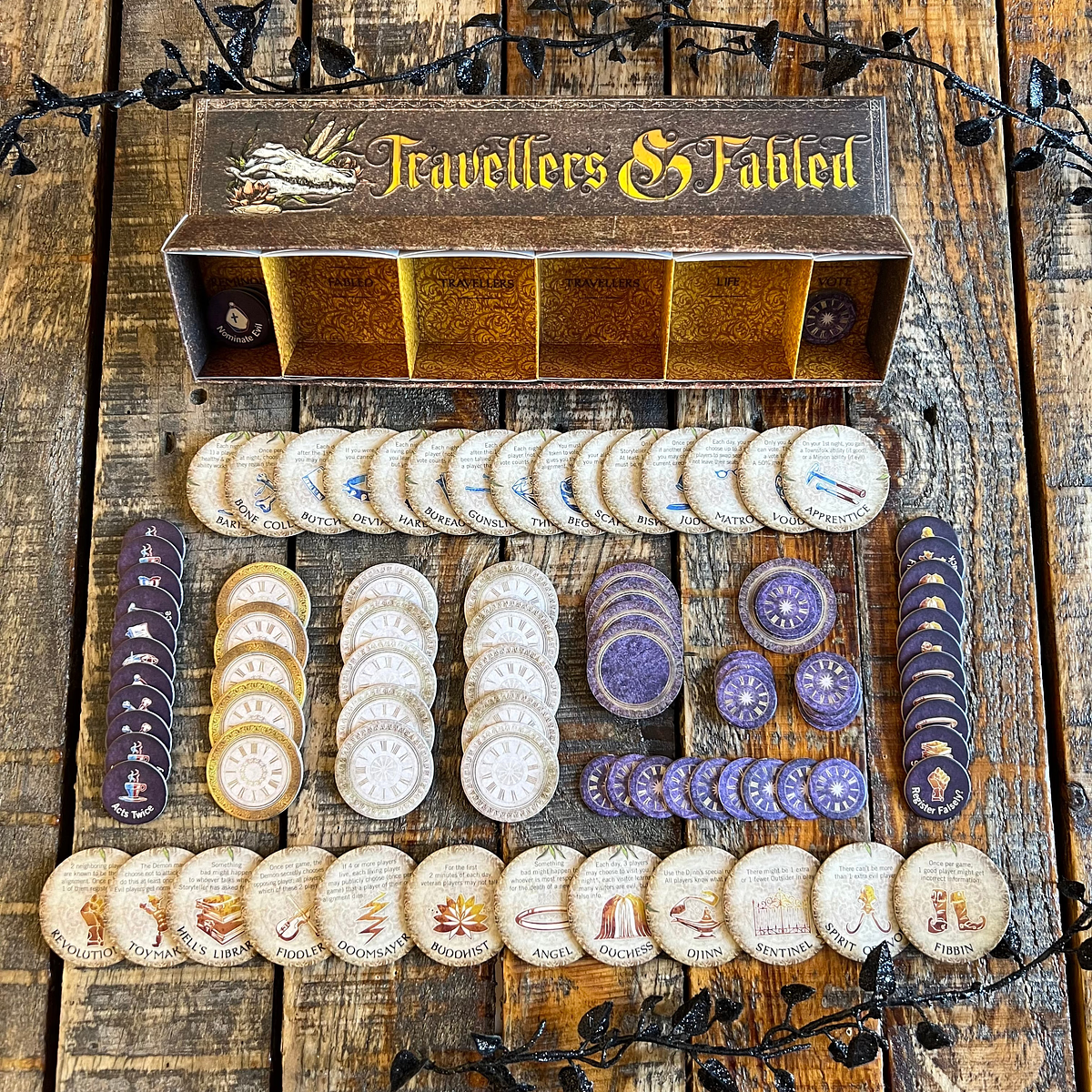
Every character in Blood on the Clocktower has a unique ability. These are not small flavour additions – they are the engine of the game.
Townsfolk are the core of the good team. Their abilities generally help gather information, protect others, or disrupt the evil team. The Washerwoman might learn which players have a specific role. The Empath learns how many evil neighbours they have. The Soldier cannot be killed by the Demon at night.
Outsiders are on the good team but their abilities often cause trouble – for themselves or for the good team. The Drunk thinks they have a Townsfolk ability, but they do not. The Recluse might appear evil when investigated. Including Outsiders makes the good team’s information less reliable.
Minions support the Demon. They know who each other are and who the Demon is from Night One. The Poisoner makes a good player’s ability malfunction. The Scarlet Woman can become the Demon if the Demon dies with enough players still alive.
The Demon kills one player each night. If only two living players remain, the Demon wins. If the Demon is executed by the town, the good team wins.
Game Setup
Before the game starts, the Storyteller selects a Script – a specific set of 22 to 25 characters that will be in play for this session. The Script determines the entire character pool. Players receive a random role from that pool, face down.
On the first night, the Minions and the Demon learn each other’s identities. The Demon is also given three characters currently not in play to use as bluffs during the day. Meanwhile, good players begin receiving their first pieces of information through their character abilities.
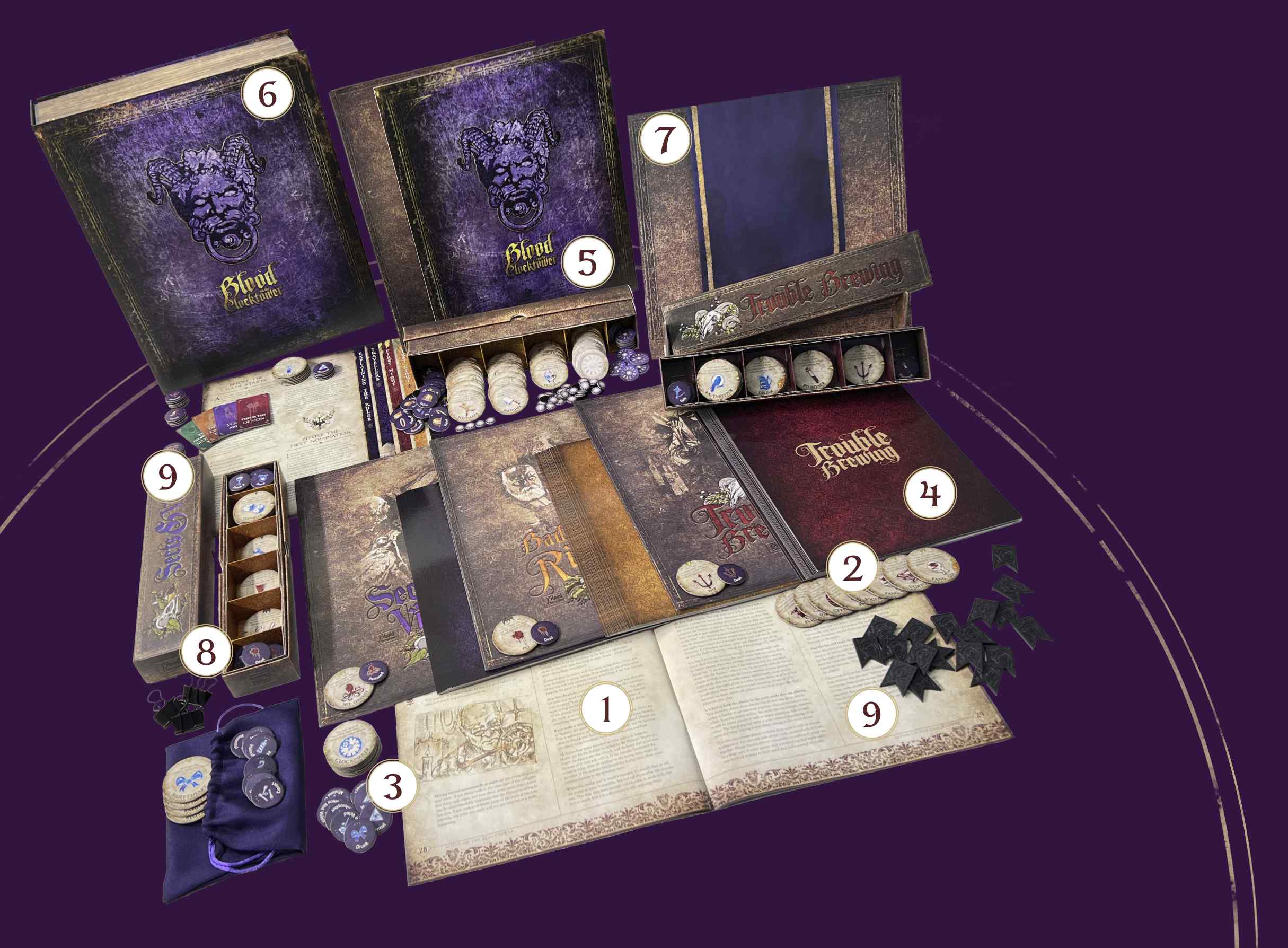
The Storyteller uses the Grimoire – a book containing every player’s role and status – to manage the game throughout. It is the only source of truth.
How to play: the Night Phase
All players close their eyes. The Storyteller works through the character order, tapping players on the shoulder or using a pre-agreed signal to wake them one by one. Each player performs their ability – receiving information, choosing a target, or taking an action – then goes back to sleep.
Crucially, the Storyteller can lie to players who are Drunk or Poisoned. If your ability is being disrupted, you will not know – the Storyteller will simply give you false information as if it were real. This is intentional. It makes every piece of information uncertain.
At the end of the night, the Storyteller announces which players have died. Those players are now Dead – but they are still in the game.
How to play: the Day Phase
Everyone opens their eyes. The day phase is essentially a court case – players share what they know, accuse each other, form alliances, and try to figure out who the Demon is.
The evil team will be lying. Some good players will have wrong information without knowing it. Some players are deliberately designed to appear evil when they’re not. The whole thing is delightfully unreliable.
At any point during the day, a player can nominate another player for execution. A second player must second the nomination. If a majority of living players vote in favour, that player is executed. Only one execution can happen per day.
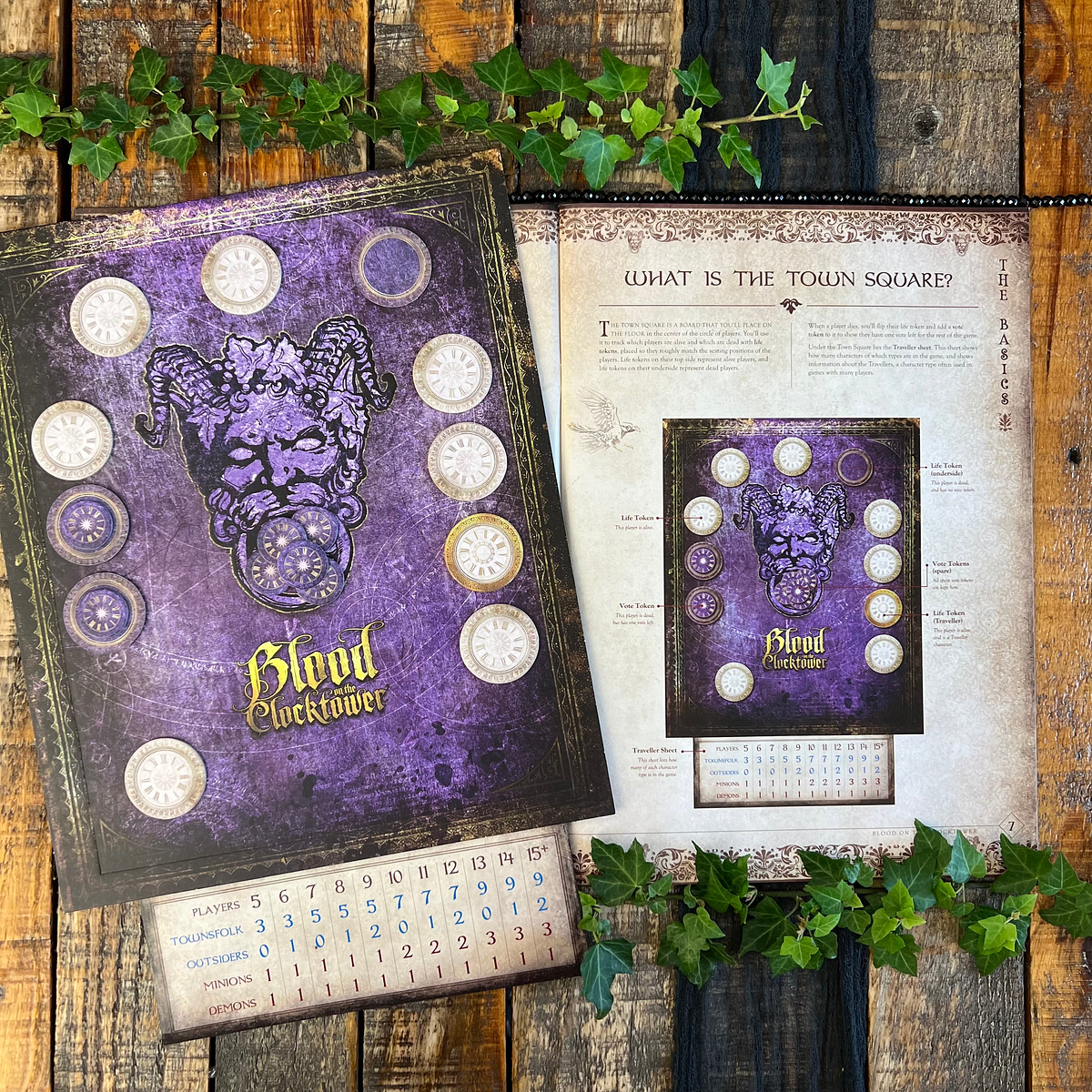
Dead players keep one ghost vote they can use for the rest of the game. They can still talk, still argue, still influence. The game only ends when the win conditions are met – not when you die.
The three official Scripts
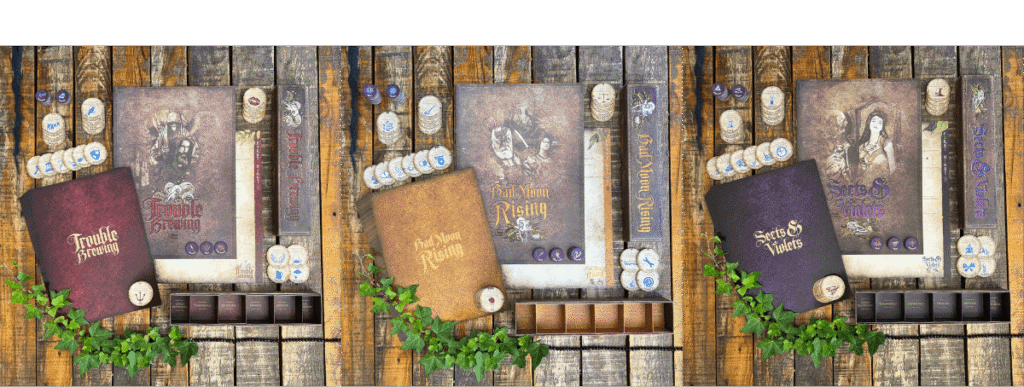
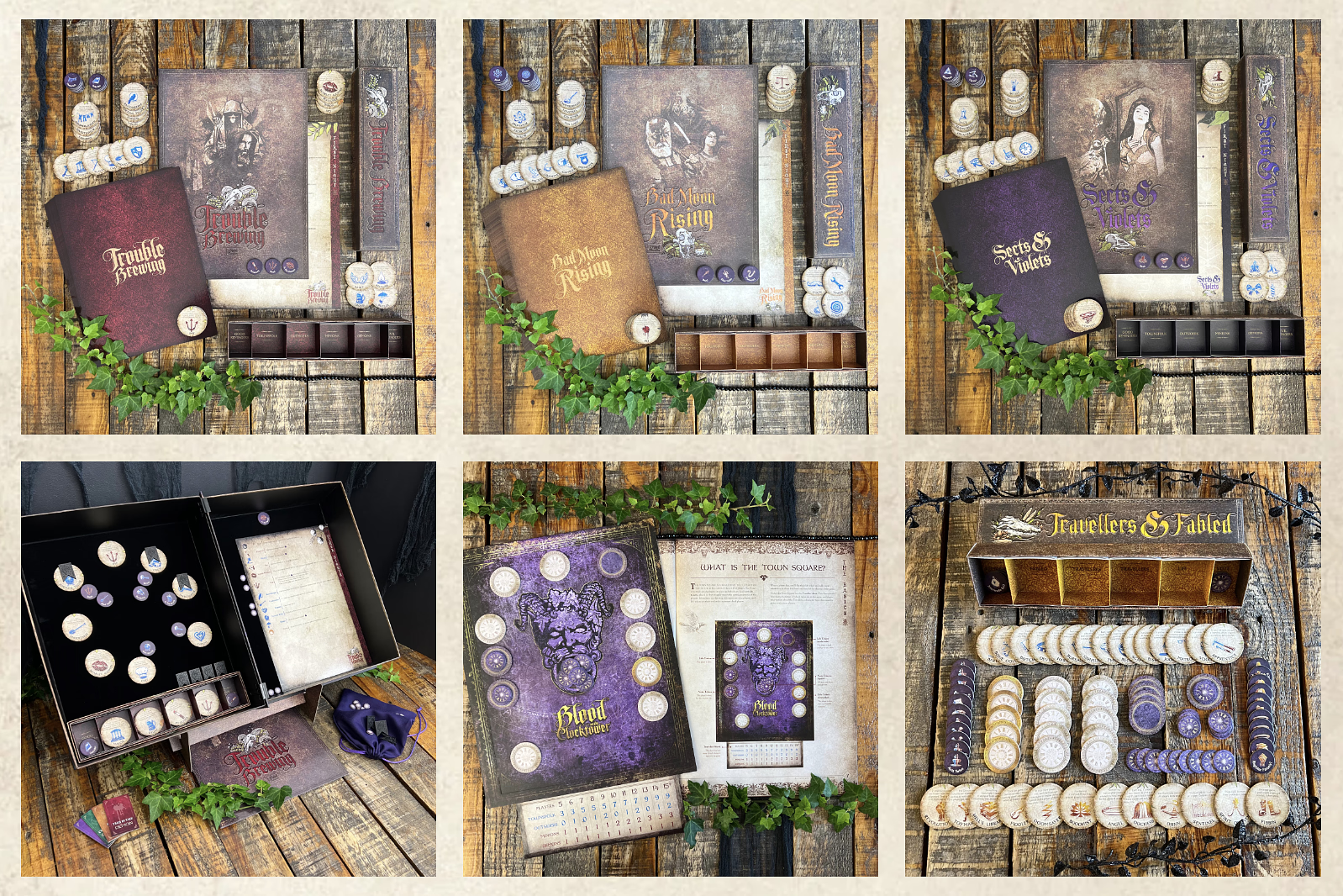
Blood on the Clocktower ships with three official Scripts, each designed for a different experience:
Trouble Brewing is the recommended starting Script. It introduces the core mechanics cleanly, with characters that give clear information and a relatively fair balance. Play this first.
Sects & Violets is more complex, with characters that warp information in interesting ways. The Storyteller has more room to be creative here. Good for groups who have played Trouble Brewing a few times.
Bad Moon Rising focuses more on killing mechanics and introduces powerful Minion abilities. The evil team plays differently here – more chaotic, more aggressive. One for experienced groups.
Blood on the Clocktower vs Werewolf: what’s the difference?
Werewolf (also known as Mafia) is the obvious comparison. Both are hidden role games where good players try to find the hidden threat. But Blood on the Clocktower addresses nearly every problem Werewolf has:
- In Werewolf, eliminated players sit out. In Blood on the Clocktower, dead players keep a vote and stay in the conversation.
- In Werewolf, most players have no ability – they just guess. In Blood on the Clocktower, every player has a unique power that gives them something to do and something to think about.
- In Werewolf, information is scarce. In Blood on the Clocktower, information flows constantly – but it might be wrong, which is the point.
- In Werewolf, the moderator is passive. In Blood on the Clocktower, the Storyteller actively shapes the experience.
The result is a game that keeps everyone invested from the first night to the final vote.
Play Blood on the Clocktower at Draughts
Blood on the Clocktower isn’t a game you can just sit down and play at a regular café table. It needs its own dedicated space, separate rooms, and room for players to move around freely, which makes it different from most of the games in our library.
We used to run dedicated Blood on the Clocktower evenings in a space set up specifically for it, and they were brilliant. We’re not running those sessions right now, but we’re hoping to bring them back. When we do, tickets will be available to book in advance through our website.
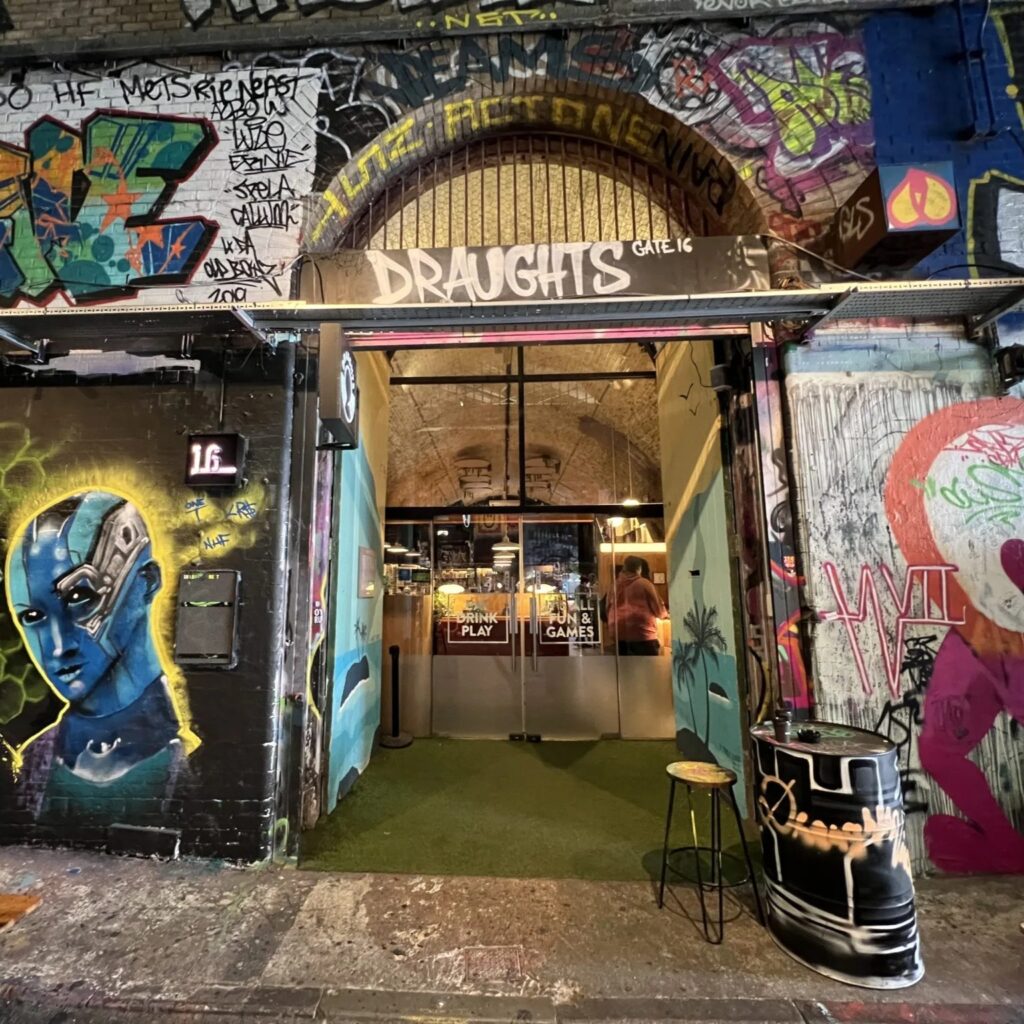
In the meantime, we’re a bar, restaurant and board game café with over 1,000 games across both our Waterloo and Stratford venues. Book a table at draughtslondon.com.

Frequently asked questions about Blood on the Clocktower:
How long does Blood on the Clocktower take to play?
It depends on player count. With 6-8 players, expect 45-75 minutes. With 9-12 players, around 60-90 minutes. Larger games of 13+ players can run 90 minutes to 2 hours or more. First-time players should budget a little extra time for setup and rules explanations.
What is the minimum number of players for Blood on the Clocktower?
The minimum is 5 players – 1 Storyteller and 4 active players. The game works at this count but the sweet spot is 7-15 players, where the information dynamics and social deduction really come alive. The game officially supports up to 20 players.
What is the best player count for Blood on the Clocktower?
7 to 15 players is the optimal range. You get a good balance of roles, meaningful discussion during the day phase, and enough players that the evil team can genuinely hide. Below 7 it can feel too simple; above 15 the Storyteller role becomes demanding and day discussions can drag.
How does Blood on the Clocktower end?
The good team wins if the Demon is successfully executed during the day phase. The evil team wins if only two living players remain – at that point the Demon is effectively safe. Some Scripts include additional win conditions tied to specific character abilities.
How is Blood on the Clocktower different from Werewolf?
The biggest difference is that dead players stay in the game in Blood on the Clocktower – they keep a ghost vote and can still talk and influence the outcome. Beyond that, every player has a unique ability (Werewolf players mostly do not), information flows constantly throughout the game rather than in scarce bursts, and the Storyteller plays an active and creative role rather than just moderating. It is a significantly deeper game.
Is Blood on the Clocktower replayable?
Extremely. The three official Scripts each play very differently, and custom Scripts built from the full character pool mean the game changes dramatically based on which characters are in play. Even with the same Script, different player combinations and Storyteller decisions make each session feel distinct.
What are the official Blood on the Clocktower Scripts?
There are three official Scripts: Trouble Brewing (the beginner Script, recommended for first-time players), Sects & Violets (intermediate, with more complex information mechanics), and Bad Moon Rising (advanced, with aggressive killing mechanics and powerful Minions). Players can also create custom Scripts using the full character pool.
How popular is Blood on the Clocktower?
Very. It raised over $570,000 on Kickstarter against a $65,000 goal, has a BoardGameGeek rating of around 8.6 out of 10 based on thousands of ratings, and has been named best party game by Tabletop Gaming. Quintin Smith of Shut Up & Sit Down called it his favourite game. It regularly sells out and has a thriving community on Discord, Reddit and BoardGameGeek.
Can I play Blood on the Clocktower at Draughts London?
Not as a standard drop-in session. Blood on the Clocktower needs a dedicated space with separate rooms and room to move around, so it can’t be played at a regular table booking the way most games in our library can.
We used to run dedicated evenings for it and may bring those back in the near future. When we do, tickets will be sold in advance. Keep an eye on our events page at draughtslondon.com so you don’t miss it.
What is the Storyteller role in Blood on the Clocktower?
The Storyteller is the game master – they do not take a character role but instead manage the entire game. They assign roles, wake players during the night phase, process character abilities, and can provide misinformation to players who are Drunk or Poisoned. They also have discretion to shape the game’s balance and pacing to keep it fun. It is an active, creative role that significantly influences the feel of each session.
What happens when you die in Blood on the Clocktower?
You stay in the game. Dead players can still talk, still participate in discussions, and still cast one ghost vote for the remainder of the game. This is one of Blood on the Clocktower’s defining features – nobody sits out. Dead players have full knowledge of the game state they were alive to see, and their input can be crucial right up to the final vote.
What is the Grimoire in Blood on the Clocktower?
The Grimoire is the book used by the Storyteller to track every player’s role, status, and current game state. It is the only complete source of truth in the game. Players never see it. The Storyteller refers to it throughout the night phase to manage character abilities and keep track of who is Drunk, Poisoned, Dead or otherwise affected.